
Improving support and services for older men experiencing domestic abuse
Foreword
Domestic abuse has a devastating impact on people’s lives, which is why one of my key priorities as Commissioner is stopping the abuse of older people.
Since I took up post, I have taken forward a significant
programme of work focused on ending abuse, including
partnership work with over 30 members of my Stopping Abuse Action Group, which I established in 2020 to take forward action to improve services and support throughout Wales for older people at risk of or experiencing abuse.
Alongside recognising that the majority of older people who
experience abuse are women, and the need to significantly
increase resources to ensure that women escaping abuse can get the support they need, engagement with action group members also highlighted concerns about the very limited data and evidence available about men’s experiences of abuse, even though it is estimated that 1 in 4 victims of domestic abuse is male, with older men at greater risk.
That is why I commissioned the research on which this report is based: to capture evidence from male survivors about their experiences of abuse and draw upon the knowledge and expertise of those providing services to identify and examine the barriers and challenges that men can face in getting help.
The report examines the different ways men may experience abuse, the barriers and challenges men face when trying to access support, and the ways in which services and support in Wales
could be improved.
The research was conducted on my behalf by Opinion Research Services (ORS), who captured evidence through in-depth interviews with male survivors of abuse aged 50+, as well as professionals working across a range of domestic abuse and other public services based throughout Wales.
I offer my heartfelt thanks to all of the older men who took part in the research for talking about the experiences they went through so openly and honestly in order to help other older men
who may find themselves in similar situations by providing crucial evidence for why change and improvements are desperately needed. I would also like to thank all of the stakeholder organisations who took part, not only for sharing so much useful information and evidence about the experiences of the people they support and vital insights about how services could be improved, but also for the support they provide to older people throughout Wales.
Finally, I would like to thank the research team at ORS for capturing this evidence and for working with participants in such a sensitive and supportive manner throughout.
The findings below, which also draw upon the limited research and literature that is available, demonstrate that older men experiencing domestic abuse face significant challenges and
barriers when seeking help and support, which means they may be unable to escape abusive relationships, something that puts them at risk of physical and psychological harm.
Furthermore, the findings highlight that older men may be reluctant to seek support due to the stigma of being a male victim of abuse, and that the small number of domestic abuse services
targeted specifically at men are under-resourced, meaning that the support they are able to provide is often very limited.
I have set out a series of recommendations designed to tackle the issues identified within this report, and I am calling for action from the Welsh Government and other public bodies and services across the following key areas:
- Improving services and support
- Improving services’ awareness and responses to older men through training
- Raising awareness and improving understanding of older men’s experiences
- Improving the collection of data and evidence to ensure policy reflects older men’s experiences and needs
As Commissioner, I have already begun working with key stakeholders – including Welsh Government ministers and officials, public bodies in Wales, the Domestic Abuse Commissioner for England and Wales, and the Victims Commissioner for England and Wales – to take forward the action needed and improve the support available to older men who are experiencing or at risk of abuse.
Through my ongoing work with members of my Abuse Action and Steering Groups – comprising over 30 organisations – I will also identify additional ways to take forward my recommendations.
Alongside this, I will continue to reach out and engage with older male survivors of abuse, and with organisations working with older men, to capture further evidence and improve understanding about abuse, as well as raising awareness and promoting sources of help.
The Welsh Government’s forthcoming action plan to end the abuse and neglect of older people in Wales also provides an important vehicle through which meaningful change can be delivered, and this report will help me to continue to influence and shape its contents before it is published.
Similarly, the work underway to take forward the new Violence Against Women, Domestic Abuse and Sexual Violence (VAWDASV) Strategy, and the subgroup focused on older people,
offers opportunities to include older men so that their voices and experiences can shape policy, practice and services throughout Wales.
Delivering the action I am calling for will be crucial as, based on the findings below, much more needs to be done to ensure that Wales has the right support and services in place so that everyone in Wales – including older men – can get the help they may need if they are experiencing, or at risk of, abuse.
Heléna Herklots CBE
Older People’s Commissioner for Wales
Background
Abuse has a devastating impact on people’s lives, and it is crucial that everyone who experiences abuse can get the help and support they may need, which in some cases can be life-saving.
Whilst data is very limited, figures indicate that around a quarter of people who experience abuse are male and that male victims tend to be older, with the highest proportion of those affected aged 75 or over.
Despite this, however, there is very little research examining the experiences of men affected by abuse, particularly the experiences of older men.
The Commissioner therefore commissioned Opinion Research Services (ORS) to conduct research on her behalf to explore older men’s experiences of domestic abuse and the barriers that may prevent them from seeking support, which was undertaken between November 2021 and June 2022.
The Commissioner intended the research to build on the work she has undertaken in recent years to ensure that the right services and support are in place for all older people who are at
risk of, and who are experiencing, domestic abuse.
Methodology
For the purpose of the research, “older men” are defined as those aged 50 and over1.
“Domestic abuse” includes physical, sexual, financial, psychological, and emotional abuse, and controlling, coercive, violent, or threatening behaviour. It can occur between married or co-habiting partners or ex-partners (including those in/formerly in same-sex relationships) or family members. Abuse perpetrated by professionals (such as care staff) in domestic settings was not explored as part of this project.
Project Overview
The project comprised:
- Two workshops, one with the Commissioner’s Abuse Steering Group, and one with the Commissioner’s Abuse Action Group2
- A literature review
- A call for evidence
- Depth interviews with stakeholders / service providers
- Depth interviews with male survivors of domestic abuse, who were aged 50 and over
Further information about the methodology can be found in Appendix 2.
Survivor interviews
Sampling and recruitment
Some survivors volunteered to take part in interviews through responding to an advert on the Commissioner’s social media accounts, while others were approached personally by service
providers on behalf of ORS. All survivors were offered a £30 e-voucher as a small token of thanks for giving up their time and taking part.
11 survivors were recruited in total, who took part in depth interviews to share their experiences directly with the researchers.
Whilst the advertising was targeted at men living in Wales, the researchers were contacted by male survivors from across the UK as they were keen to make their voices heard. This meant that of the 11 survivors who took part, three lived in Wales, seven lived in England and one lived in Scotland.
1 The research team was contacted by a number of men in their 50s who wanted to participate and share their
experiences. The scope of the research was therefore broadened to include men in this age group.
2 Information about the Commissioner’s Stopping Abuse Action and Steering Groups is available here: https://old
erpeople.wales/stopping-abuse-action-group/
It is important to note that the survivors who took part in interviews were all in their fifties and sixties, and that in a number of cases the abuse they experienced occurred over many years, sometimes beginning before they were ‘older’ men. It is likely that men in their seventies and eighties were unable or unwilling to participate partly due to some of the barriers explored below, such as not recognising that abuse is occurring, or feeling embarrassed about being abused.
Nevertheless, the experiences shared provide very valuable insights into the nature of the abuse that men, including older men, can face, as well as the barriers that can prevent them seeking and accessing help and support, which may be even greater for older men, as explored below. These experiences also illustrate how abuse at any age can have an ongoing impact on
men’s lives as they grow older.
Whilst the survivors interviewed are based throughout the UK, meaning that their specific experiences of finding and accessing support may have been different due to their circumstances and some differences in policy and practice in different UK nations, their experiences shared many common factors in terms of the difficulties and challenges they had faced, which are considered below. Furthermore, the experiences of the survivors based in
Wales appear to broadly reflect the experiences of all the survivors.
Safeguarding and support
ORS took the following steps to reassure and safeguard the survivors they interviewed:
- Providing detailed information about the research and the interview beforehand, including the details of relevant support agencies
- Obtaining written consent to take part
- Offering the choice of a male or a female interviewer, and to take part in Welsh or English
- Offering the choice to have a friend, support worker, or family member present during the interview
- Reassuring them that they would not be identified in the report or case studies that ORS wrote
- Reassuring them that they did not have to answer any question they did not want to; could stop the interview at any time; and could change their mind about taking part, even after the interview
About the report
The findings and issues highlighted within this report are based on the voices and experiences of male survivors captured during the interviews. In addition, evidence was captured during
interviews with stakeholders / service providers, including representatives from men’s abuse support services, wider abuse support services, and other organisations delivering services and
support to older people both locally and nationally. The sections below include relevant quotes from those who participated.
The report provides a review of the literature on older men and domestic abuse, together with a section that sets out the policy context in Wales and the UK.
The report also includes a series of recommendations based on the research findings, which sets out the action needed from governments and public bodies to tackle the issues identified
and improve the support available to older men who are experiencing or at risk of abuse in Wales.
Literature review
Introduction
In recent years there has been increasing awareness of the risks older men face in relation to domestic abuse, and further research into male survivors of female-perpetrated partner violence (Machado, Hines, and Douglas, 2020). Nonetheless, despite extensive literature on domestic abuse more generally, there are fewer studies into support that specifically caters to the needs of men who have experienced or are at risk of it – and fewer still on older men in this context. As the issue is under-explored, the extent and effects of abuse against males, and older males in particular, are poorly understood (Perryman and Appleton, 2016).
Nature, scale, and extent of abuse of older men
Abuse takes many forms
There are many different forms of domestic abuse, including sexual violence; harassment and exploitation; coercive and controlling behaviour; and financial abuse. The latter ranges from money and property being stolen or being defrauded, to a person being put under pressure in relation to money or property (Barry and Bowen-Davies, 2021).
Moreover, and as highlighted in the next chapter, around half of the eleven survivors interviewed for this study had experienced reproductive abuse or coercion, which is defined as:
“Behaviour that interferes with contraceptive and pregnancy choices of women and occasionally men. This includes birth control sabotage (intentional destruction of a woman’s chosen method of contraception, pregnancy pressure, (behaviours to coerce pregnancy against one’s wishes), and pregnancy coercion (threats to direct the outcome of a pregnancy).” (Park et al., 2016)
Reproductive abuse or coercion tends to be described as something that is exclusively or nearly always perpetrated by men against women. However, there is some recognition that men can also be victims, along with an acknowledgement that very little research exists that explores reproductive abuse against males (Grace and Anderson, 2018).
It is also important to note that older victims are more likely to experience and tolerate different kinds of abuse simply due to their age. For example, SafeLives (2016) reports that victims aged
61+ are 38% more likely to experience abuse from an adult family member; and are 41% less likely to attempt to leave their perpetrator in the year before accessing help.
Data relating to men’s experiences of abuse
According to the literature reviewed, identifying the nature, scale, and extent of abuse against older men is difficult. Data on the numbers of older people experiencing abuse is scarce, and that which exists is inconsistent. The lack of an agreed definition of an ‘older’ person, differing definitions of ‘abuse’, and under-reporting further complicates identifying the prevalence of
abuse against older men (Baker et al., 2016).
SafeLives (2016) estimates that around 120,000 individuals aged 65+ in the UK experienced at least one kind of abuse in 2016, as shown in the table below. The table also shows that male clients made up only 4% of clients aged 60 and under, but 21% of those aged over 60.
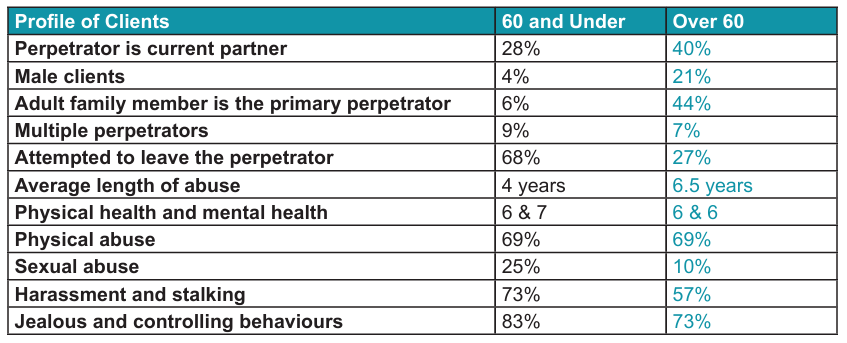
In Wales, estimates of the numbers of older people who are experiencing abuse range from tens of thousands (Barry and Bowen-Davies, 2021) to over 143,000 in a 2021 Hourglass poll.
The latter figure would mean that 1 in 5 older people may be experiencing abuse (the World Health Organisation (2017) estimates 1 in 6 worldwide).
Practitioners’ knowledge of the definitions surrounding domestic abuse informs their practice and can create inconsistencies when reporting data. For example, financial abuse by the relative of the victim is not always reported as domestic abuse (interestingly, it is not included in the table above), leading to inaccurate risk assessments and inappropriate responses.
Practitioners have also been found to be uncertain about the types and level of information they can record; and differences in how ‘significant harm’ is interpreted have caused variations in
threshold decisions across local authorities. In addition to this, there is sometimes a perception that for domestic abuse to be recorded as such, it has to be committed by someone who is
living with the victim, but this is not the case, as domestic abuse refers to the relational factors involved rather than the location (Her Majesty’s Inspectorate of Constabulary and Fire and
Rescue Services, 2019; Lazenbatt, Devaney, and Gildea, 2013).
Risk factors
A study covering seven European countries indicated that older men educated to higher levels, blue collar workers and men living in rented accommodation are more often victims than those who are less educated, are low-rank white collar workers and homeowners. Other factors shown by this study to increase the likelihood of being abused include having a physical disability and/or anxiety symptoms. (Melchiorre et al., 2016).
Being from an ethnic minority background, or having a disability or dementia, have also been identified as factors that increase the risk of abuse (SafeLives, 2016).
Furthermore, little is known about how other minority populations experience abuse and access services, especially older adults who are lesbian, gay, bisexual, transgender, queer, questioning, and ace (LGBTQ+ ) (Bloemen et al., 2019; Machado et al., 2020).
Increasing prevalence
Existing research recognises that as the population grows and ages, abuse against older men – and older people more generally – is likely to increase (Her Majesty’s Inspectorate of Constabulary and Fire and Rescue Services, 2019). The COVID-19 pandemic appears to have exacerbated the situation, leading to an increase in domestic homicides of older victims for example. The proportion of older people who were killed by a family member who was not their partner rose from 35% to 43%, and the proportion of older people who were killed by their partner increased by an even greater extent, from 9% to 18% (Hoeger et al., 2022).
Barriers and challenges faced by older male survivors when disclosing and accessing services
The lack of data when it comes to older men experiencing or at risk of domestic abuse can be attributed to a number of overlapping causes, not least that there are barriers that prevent them from coming forward to disclose and seek support. These include their own internal shame; the fear of being ridiculed by friends and family and / or the need to maintain a sense of masculinity; the fear of being alone in old age, social embeddedness and meanings of ‘home’; lack of knowledge around service provision and safeguarding processes; and simply not recognising that a relationship is abusive in the first place (Hogan et al., 2021; Bates, 2019; Wydall and Zerk, 2017; Wallace et al., 2019).
A report by the Welsh Government and the Older People’s Commissioner for Wales (OPCW) has identified other personal barriers for older people: they may face ageist attitudes and
stigmatisation; have fears that disclosure will exacerbate the abuse, and / or notions of privacy within the home and intimate relationships; be loyal to the perpetrator; have independence or
self-esteem issues; or lack confidence in what support services can actually provide (Welsh Government and OPCW, 2017).
More practically, Wallace et al., (2019) highlights several issues that could influence men’s decision to access support to leave an abusive relationship, such as child contact (likely to affect older men in their fifties particularly); financial obligations to joint mortgages or tenancies making accessing alternative accommodation and the means to support daily living difficult; and employment, which is a barrier to accessing both support services and additional help such as housing benefit and legal aid.
Assumptions about older men
One of the strongest findings to emerge from the interviews undertaken with survivors, service providers and stakeholders for this project (as reported in the next chapter) was that older men
are often assumed to be perpetrators, not victims. These findings are reflected in the literature, which identifies societal norms that dictate perceptions of females as victims and males as perpetrators – meaning many male survivors fear that they will be (and indeed are) met with suspicion, judgement, and discrimination when disclosing abuse and / or trying to access
support (e.g., Hogan et al., 2021; Wydall and Zerk, 2017; Bates, 2019; Wallace et al., 2019).
Indeed, when contacting statutory and support services, there have been reports of men being treated in a gender-stereotyped way based on the assumption that men are always the abusers and never the victims (Hogan et al., 2021). In the Hogan et al. study, this was particularly the case when it came to the police, with many men frustrated with the way in which their victimisation was handled, leading to feelings of shame and embarrassment (though it should be noted that, occasionally, the police had been instrumental in helping male victims to
recognise their relationship as abusive).
Finding support
Alongside a general lack of service provision for male survivors of domestic abuse, many surveys and studies have not included victims of domestic abuse aged over 60 (SafeLives, 2016) and awareness raising campaigns, promotions and the media rarely focus on or include older people’s experiences in their imagery or language; instead focusing on younger victims and perpetrators. This has led to the assumption that abuse support services do not cater to the needs of older victims – especially men – and a lack of recognition of the ways older people can be affected, consequently causing fewer older people to seek help and advice (Barry and Bowen-Davies, 2021; Wallace et al., 2019). This is compounded by the fact that, along with gender-based discrimination, older men also face issues of age discrimination from practitioners when seeking support or using abuse services (Wydall and Zerk, 2017).
Additionally, across the literature it is highlighted that older people lack a voice when it comes to developing services, resulting in their abuse experiences not being considered. This means that very few services have been adapted to focus specifically on the needs of older people, and in particular older men, suffering or at risk of abuse.
Survivors with protected characteristics
Certain characteristics can mean that older men experiencing or at risk of domestic abuse face additional barriers that prevent them from accessing support. These same characteristics can
also mean that they are at greater risk of suffering abuse in the first place.
Living with a disability and/or relying on care can reduce a person’s capacity to defend themselves, and to recognise, report and escape abuse. This is also hindered by physical environments and inaccessibility. Older victims are significantly more likely to have a disability, and for one in three this will be physical (SafeLives, 2016).
Another prevalent issue for older people is that of dementia, and how this can both cause older men to be victimised and hinder their ability to get out of an abusive situation (McCausland et
al., 2016).
In Black, Asian and Minority Ethnic communities there is an even more acute under-reporting of domestic abuse. Victims from these backgrounds – including older men – are more likely to mistrust the police and other agencies, and they may face language barriers or even issues with their immigration status were they to seek formal support (BAWSO, 2020).
LGBTQ+ older people are generally “by and large invisible in the mainstream support system” (Lovatt et al., 2020) with just 2.5% of victims accessing domestic abuse support services identifying as LGBTQ+ (SafeLives, 2018). Moreover, services themselves may be less likely to detect domestic abuse among LGBTQ+ older men, because abuse is still largely misunderstood as a hetero-normative and gendered experience and abused men defy these notions (Wallace et al., 2019).
The impact of Covid-19
Barriers have been exacerbated by the COVID-19 pandemic, whereby many support services have had to adapt to provide support online or by telephone. This can be more of a challenge
for older people to access. It has also been recognised that face-to-face contact is more effective to identify abusive situations and discern victim-perpetrator dynamics and/or cases of manipulation, and for practitioners to establish a relationship with the victim to ensure the support is led by them (Barry and Bowen-Davies, 2021). Additionally, time away from the
perpetrator provides opportunities for further disclosure and safety planning, all of which has been hindered by COVID-19 safety measures requiring people to stay at home. In fact, there
was a 9% increase in the total number of domestic abuse-related offences reported by the police, and the rate of domestic homicides doubled since the pandemic began (Grierson, 2020).
Improving access to support and effective practice
The case for change
The literature is clear that older men (and indeed older people more widely) need practices to change so that they are able to make informed choices and that their priorities are central in
decision-making processes (Wydall and Zerk, 2017).
Moreover, there is a need to address the widespread lack of knowledge of the support available and the general expectation that the provision that does exist is not suited to or is unlikely to
help males – as well to ‘normalise’ the male victim experience so that it is seen as acceptable to seek support, that their experiences are serious and important enough to do so, and that
seeking help will not threaten their male identity (Wallace et al., 2019).
An example of the difference having a dedicated, visible and well-established provision for men is offered by Wallace et al. (2019), who cite the low number of men accessing domestic abuse
provision generally – with the exception of four services they studied who had frequent referrals, calls of enquiry and engagement with male victims/survivors. These services had accessible and targeted provision in place.
Holistic, co-produced support and services
The Social Services and Well-being (Wales) Act 2014 places ‘adults at risk’ on a statutory basis and created new duties for local authorities. Alongside this, the Violence against Women,
Domestic Abuse and Sexual Violence (Wales) Act 2015 addresses how public sector bodies respond to domestic abuse and introduces a more strategic approach (Wydall et al., 2018).
These two initiatives promote collaborative working and an integrated response between support services; and take a more proactive intervention stance. As one practitioner said, “I
would be happier to be questioned as to why I poked my nose in than I would be in a Coroner’s inquest saying why I didn’t” (Wydall et al., 2015). Survivors’ views on service provision were
included in the development of the strategies, although there were some concerns that these were not adequately represented. (Wydall et al., 2018).
Elements of good practice that are recognised throughout the literature commonly centre on co production with older people to provide the holistic care, assertive advocacy, and trust-building
that will enable and empower them to explore options and determine their own solutions. A person-centred, co-ordinated approach is recognised by all the literature on this subject as the
most beneficial and practicable in responding to individual needs by facilitating engagement, preventing further harm and using staff resources efficiently. Working with the victim at every
stage of the process is essential in this respect.
A non-judgemental approach
Some men have negative help-seeking experiences, whereby they are met with suspicion and contempt, but others have found that positive help-seeking experiences facilitated them in recognising their relationship as abusive – influencing their decision to leave or seek further help (Hogan et al., 2021). This demonstrates the need for practitioners to be non-judgemental when assisting older men.
The men in the Hogan et al. (2021) study said that they found it difficult to find people they could talk to and trust even within their own support networks, as family and friends did not know
how to respond, or did not validate their experiences, therefore undermining their own ability to recognise their relationship as abusive. Often, after an initial negative response to an attempt at
talking about their experiences, the men made a decision not to talk about it again.
The importance of having just one other person who believes you and offers no judgement was particularly significant to the male victims in the Hogan et al., (2021) study. This reinforces the importance of establishing relationships and trust with victims to create person-led support plans, as discussed above.
Training and support for staff
Support services that specifically cater to the needs of older men are few and far between, but there are mainstream services that provide universal support. However, these need to expand staff training to gain more flexibility to respond to the needs of older men experiencing or at risk of domestic abuse specifically (Wallace et al., 2019).
The literature highlights that healthcare practitioners such as GPs and health visitors are in an ideal position to identify domestic abuse among older men due to their level of contact with older people and ability to signpost and provide information (Perryman and Appleton, 2016). However, there are concerns that these opportunities are missed because meaningful dialogues are not initiated, and because their knowledge and understanding of thresholds is unsatisfactory. In fact, there is some evidence of health professionals assuming that domestic abuse “stops at around 50” (Lazenbatt, Devaney, and Gildea, 2013).
Where extensive staff training has been undertaken, it has demonstrated a more sophisticated and nuanced understanding of abuse in older people. Investment in this is important so that
current systems can become flexible and incorporate the needs of older men experiencing or at risk of domestic abuse (Wydall et al., 2015).
Group-based / peer-led support
Hogan et al. (2021) suggests that group-based support services for male victims may provide men with a ‘safe’ place to share their experiences and navigate some of the challenges presented by masculine norms and expectations. The men taking part in the study reported that they valued sharing their experiences with someone who had been through a similar experience, and that meeting other men in similar circumstances to them had normalised their experiences and reduced their fear of being ‘the only one’.
Services for minority groups
As highlighted earlier, the abuse experiences of those identifying as LGBTQ+ are almost entirely overlooked, and older LGBTQ+ people even more so. Add ‘male’ into this and it is clear that the
hetero-normative, gender- and age-based assumptions of domestic abuse are wholly outdated and now serve as a hinderance to these people accessing support.
The unique challenges of the abuse of older men in rural communities should be recognised, as should the need to provide services in Welsh.
Research suggests that older victim-survivors’ age, social embeddedness and interconnectedness with family compounds the difficulties they face when seeking help, meaning their range is restricted and the quality and type of support provided can be lesser than for other groups. This is a significantly prevalent issue for older men living in rural areas, where physical geography also restricts what services they are able to access (Wydall and Zerk,
2017).
Evidence also shows that not providing services in Welsh to those who prefer to receive them leads to poorer health and wellbeing outcomes (Harries and Bryer, 2021). Accordingly, there are strategic frameworks in place which seek to strengthen Welsh language provision, such as More than Just Words (Welsh Government, 2016).
A commitment to resourcing improvements must be made
Finally, none of the above will be achievable without a fully resourced commitment to improving services and increasing the number of men who feel able to disclose and seek support. Without this, the perpetual cycle – low numbers of men seeking support, affecting the evidence of need required to apply for funding to develop new or additional services for men, resulting in limited provision and low numbers of men seeking support – will never be broken (Wallace et al., 2019).
Policy Context
Issues of domestic abuse are largely addressed through the VAWDASV (Violence Against Women, Domestic Abuse and Sexual Violence) policy arena. Policy and legislation related to
domestic abuse in Wales, is made in two ways. Firstly, the criminal justice system and legal jurisdiction of England and Wales are reserved, non-devolved matters. This means that some
of the VAWDASV legislation made at Westminster (notably that related to any criminal aspects of VAWDASV), therefore shapes and impacts practice within Wales. The most recent notable
example of VAWDASV legislation made by the UK Government, and applicable to Wales, is the Domestic Abuse Act 2021.
The Domestic Abuse Act 2021 sought to increase protection for victims of VAWDASV, through improving the criminal justice system. It introduced, for example, a Domestic Abuse Notice (DAPN), which was intended to afford victims immediate protection after an incident and a Domestic Abuse Protection Order (DAPO), which was designed to afford longer term
protection. It changed the ways in which victims were to give evidence in court and sought to increase understanding of the multidimensional nature of domestic abuse, through creating a
new, statutory definition of domestic abuse. This definition made clear that many behaviours constitute domestic abuse, including physical abuse, emotional abuse, controlling and coercive
behaviour and financial and economic abuse. Importantly, the Act established in law the office of the Domestic Abuse Commissioner, which covers both England and Wales. The Domestic Abuse Commissioner has responsibility for raising awareness of issues of domestic abuse and to hold public bodies to account for their work in relation to VAWDASV.
Secondly, there has been an increase in a distinctive body of Wales-specific legislation since 2006, when the Welsh Government was granted the power to make measures and to pass laws in certain devolved areas. Whilst, to reiterate, issues of criminal justice are non-devolved; VAWDASV impacts on several other areas for which Welsh Government holds primary
responsibility and is therefore able to legislate (these areas include housing, health and social services).
‘The Violence Against Women, Domestic Abuse and Sexual Violence (Wales) Act’ (2015), built upon the 2010 ‘Right to be Safe Strategy’ and required Ministers, local authorities and health boards to prepare strategies for action, to address issues of abuse, domestic abuse and sexual violence. The legislation gave rise to the Welsh Government’s ‘National Strategy on Violence
against Women, Domestic Abuse and Sexual Violence – 2016-2021’, which highlighted key objectives linked to the prevention of abuse and to the protection and support of victims. These objectives were numerously focused upon raising awareness of VAWDASV; holding perpetrators to account; the prioritisation of prevention and early intervention; practitioner training, and actions to ensure the quality of VAWDASV services.
The implementation of the Act was supported through the provision of statutory guidance issued to relevant authorities (for example, on the commissioning of VAWDASV services). The
development of National VAWDASV Indicators and a National VAWDASV Communication Strategy, which produced campaigns such as “Crossing the Line” and “Don’t be a Bystander”, also formed a part of the overall implementation framework. A National Survivor Engagement Framework was established to ensure that actions were influenced by the lived experiences
of victim survivors. Those affected by VAWDASV were also subsequently supported through Welsh Government funding for the ‘Live Fear Free Helpline’ (which provides help, advice and
emergency support to victims of VAWDASV), the funding of Independent Domestic Violence Advisors (IDVAs) and Independent Sexual Violence Advisors (ISVAs) and through the ‘Ask and Act’ initiative, which has been rolled out across the relevant authorities (namely local authorities, local health boards, the Fire and Rescue Services Authorities and NHS trusts).
The refreshed VAWDASV strategy was published in May 2022 and will run to the end of the current administration period (that is, until 2026). This ‘All Wales’ strategy has a number of key objectives, underpinned by several fundamental principles. These principles include for example, the need to develop a “whole society” approach to tackling VAWDASV (making issues of violence and abuse, everybody’s business). The strategy also aims to address the negative attitudes and stereotypes which work to legitimise VAWDASV, and which therefore facilitate its
continuation.
Significantly, the strategy seeks to take domestic abuse from the private, domestic space and to address it within the public sphere; thus, there is a focus on “Street and Workplace
Harassment”. It also aims to increase awareness of healthy relationships amongst children and young people; to tackle perpetration and to promote behaviour change; to make prevention and early intervention a priority; to improve the training (and hence understanding and competence of front-line practitioners); and to ensure the adequacy of needs-led, inclusive services.
The strategy is to be implemented through a ‘blueprint model’; an: “action plan that draws together different organisations to jointly deliver a whole system approach” to an identified issue. A new governance structure is proposed to oversee the work of the strategy. This is comprised of a co-chaired Ministerial Partnership Board, which will act as a forum to broker decisions and to foster collaboration and commitment amongst multiagency partners. The Ministerial Partnership Board will oversee the work of several sub-streams, which include: ‘street harassment / safety in public spaces’; ‘workplace harassment’; ‘tackling perpetration / behaviour change’ and ‘sustainable commissioning’. Following calls from the Older People’s
Commissioner for Wales, Welsh Government has now agreed to the establishment of a sub-stream specifically focused on ‘Older people and VAWDASV’. It is anticipated that this sub-stream will provide critical opportunities for raising awareness of the specific issues and challenges faced by older people at risk of, or experiencing VAWDASV, and to ensure that the needs of older people are explicitly recognised in other areas of policy development (such as in the commissioning of specialist VAWDASV services).
It is important to recognise that domestic abuse is one element of the abuse that can be experienced by older people and that older people can experience different kinds of abuse, at the hands of those with whom they are not in ‘personally connected’ relationships. The issue of the ‘abuse of older people’ (including domestic abuse) is therefore addressed both through VAWDASV policy, and policy relating to older people in Welsh Government. It is of course, important that these different policy areas are joined up to help ensure the effectiveness of policy implementation.
By way of example, the Welsh Government has published its ‘Strategy for an Ageing Society’ The Strategy recognises the deep-rooted, social inequalities faced by many older people (made more visible by the covid-19 pandemic), and makes a commitment to address the barriers, which prevent some older people from living well within society. Critically, the Strategy
recognises the significant harms of all forms of abuse upon the lives of older people and makes a commitment to work with the Older People’s Commissioner, and others, to produce a ‘National
Action Plan to Prevent the Abuse of Older People’, a draft of which has now been published for consultation.
Findings
Nature, scale, and extent of abuse of older men
Identifying the nature, scale, and extent of abuse of older men is
challenging
As identified in the literature, identifying the nature, scale, and extent of abuse against older men is difficult. Data on the numbers of older people experiencing abuse is scarce, and that which exists is inconsistent. Stakeholder and service provider interviewees echoed these findings. They noted that differences between agencies’ approaches to recording and categorising domestic abuse makes it hard to recognise the true extent to which it exists against older men.
“We have had a problem in terms of prevalence and measuring prevalence … [Agencies] will list emotional, physical, sexual, psychological and five specific areas, but they don’t even mention coercive control … The data management systems across different local authorities and across the police, they are all different, they don’t talk to each other, and they don’t disaggregate the data.” – Stakeholder / service provider
A further issue raised by stakeholders and service providers was that, until recently, the Crime Survey for England and Wales only included people aged up to age 74. They also highlighted that detailed data relating to the nature, scale and extent of abuse against older men was often not publicly available and sometimes only obtainable through Freedom of information requests.
The lack of an agreed definition of an “older” person, differing definitions of “abuse”, and under reporting of abuse further complicates identifying the prevalence of abuse against older men, according to the literature (Baker et al., 2016), and the stakeholders and service providers interviewed.
“What counts as an ‘older’ man? … We don’t collate that information. But would you class an older man as different ages to an older woman? [sic.] … Different agencies will have different definitions … Younger groups get classified, so why would it not be the same for the older person? We need a standard age so that people can be working towards the same goal. It needs to be like for like.” – Stakeholder / service provider
Abuse of older men is under-reported
Echoing the findings from the literature review, most stakeholders and service providers felt that it is hard to understand the current nature, scale, and extent of abuse of older men. This was largely thought to be due to under-reporting because of the following inter-related factors:
Stigma, shame, and embarrassment. This was linked to more traditional views of masculinity
“Men are characterised as individuals who don’t have vulnerability. The narrative around men is that they are competent and able. It’s one of the things that male victims across the age spectrums face as a challenge; that they’re traditionally expected to be fine and be able to cope and it’s an expression of vulnerability to be targeted for abuse.” – Stakeholder / service provider
Survivors not realising that they are experiencing abuse
“I’m still not 100% sure that it’s recognised … if … my mother had assaulted my father, my father would not recognise that as domestic abuse. He would just think that it was something that had happened, and it was no-one else’s business.” – Stakeholder / service provider
Fear of splitting families, getting family members in trouble, and / or losing access to children. This (as with some other factors) was said to lead survivors to hold back from disclosing abuse until it becomes very serious.
“If it’s a family member abusing them, they will do all they can to protect them. All they want is the abuse to stop … They fear they will lose their children if they do disclose. Most of the time men would protect the abuser until it gets that bad that they can’t cope anymore.” – Stakeholder / service provider
Dependence on the perpetrator for care, which is linked to having less opportunity and / or ability to report abuse. The caregiving role was seen to mask abuse by some stakeholders and service providers
“If you have an able-bodied partner and your capacity is diminishing, they will be… treated as the carer. That’s creating a block to you asking for help, because they essentially become your door to the world.” – Stakeholder / service provider
Clive’s Story
Clive, who lives in Wales and is in his late 60s, was subjected to coercive control and psychological, emotional, financial and physical abuse by his wife throughout their 30-year relationship.
Clive was unable to access appropriate out-of-hours refuge support when he first left his marriage, which forced him to return to his abuser, but left for good when he found himself in
immediate danger.
Clive initially went to a friend’s house, who advised him to contact the Local Authority Emergency Housing Service, which temporarily placed him in a hostel where he felt safe and secure. When seeking more permanent accommodation, he was initially offered somewhere around 100 miles away, which he could not access as he had no money or transport.
He also reported the abuse to the police, and said they were especially helpful: they listened and believed him, checked on his well-being while he was staying in the hostel and offered to
arrest his ex-wife.
Barriers and challenges
The principal barrier preventing Clive from seeking support was the fear of not being believed. Another barrier was not having access to a telephone or the internet at home to enable him to
disclose the abuse or seek support.
In addition, he had never seen support for male survivors advertised in public spaces, so did not know where to go for help once he had left. He also found that services lacked capacity to
support older male survivors.
Improving support
Clive feels that there needs to be more and better advertising that is directed at older men to encourage disclosures of abuse.
He also feels that there should be a ‘rescue service’ to take those who leave suddenly to safe refuge accommodation where their abuser cannot find them.
Clive also recommends that support agencies should have specialist training to ensure they have the right knowledge, skills, and experience to detect abuse, and to support older men
without misunderstanding or judgement.
Further details of Clive’s experiences are available in the full case study on page 41.
Services not uncovering abuse due to preconceptions or prejudice
“People don’t really understand the notion of domestic abuse against older people or see it as an aspect of domestic abuse. Older people are still seen in ageist views in many ways and are seen as the ideal victim, but also not as a victim group that
needs attention.” – Stakeholder / service provider
Fear of losing financial security
“The fear of losing everything they have worked for. With a lot of the older people that we have spoken to, they have a lifetime of things they have built up and it’s losing everything there.” – Stakeholder / service provider
Abuse of older men is multi-faceted
The stakeholders and service providers interviewed said that financial and physical abuse, coercive control, and neglect are the most common types of abuse reported by or on behalf of older men. One highlighted the need to consider the difference between calculated and deliberate domestic abuse of older men, and that which results from excessive strain on families. Both are wrong, it was said, but recognising these differences influences the kinds of approaches that should be taken to support survivors and their families.
“You’ve got to think about abuse in two terms; the abuse that is manipulative, deliberate, calculated, coercive; [and] the more difficult, challenging, unfortunate situations with stress and pressure and caring responsibilities … The abuse that might go on there is unintentional, but it still happens…The complexities are never ending, and it is very difficult but there are options and things that can be done. Just because it is difficult doesn’t mean we shouldn’t try to help.” – Stakeholder / service provider
All bar one of the survivors interviewed for this project had experienced multiple kinds of abuse, most often a combination of controlling, coercive, violent, or threatening behaviour; and financial, physical, emotional and psychological abuse. Only one had experienced sexual abuse (along with other types of abuse), and another had experienced only physical abuse. In all but one case, the survivor’s wife or ex-wife was the perpetrator. In the remaining case, the survivor’s son was the perpetrator.
Examples of the various kinds of abuse experienced by the survivors interviewed are outlined below:
Controlling, coercive, violent, or threatening behaviour.
This often involved perpetrators isolating survivors from their friends, family, and children; preventing them from using the telephone or internet or scrutinising their telephone and internet
use; threatening to harm themselves or others unless survivors complied with their wishes; damaging or destroying property; and falsely reporting survivors to the police for assault.
“I had to break contact with all of my family and so my parents weren’t in the picture … The amount of times the children have phoned me to say, ‘You need to come home. Mum is trying to kill herself if you don’t come home’ … It was all very controlling.” – Survivor
Financial abuse
Often, survivors’ wages were paid directly into perpetrators’ bank accounts, leaving survivors perpetually short of money. Perpetrators also had property and assets signed over to them
without survivors’ knowledge or consent.
“In the end, when I work it all out, [the perpetrator] took me for £536,000. I am now £40,000 in debt and I haven’t worked for three years. She’s got our home [and] she’s also got a four bedroomed house … and I live in a flat which isn’t mine.” – Survivor
Physical abuse
Survivors reported being physically hurt by perpetrators, often seriously and in front of their children.
“I had my iPad on, and it was facing the table, so she didn’t know I was videoing it… I stood up with it and told her I was videoing it and you see her lunge across the table, but the iPad goes up in the air, and you don’t see her punch me in the face and then lifting the cup and stopping herself from smashing it against my head.”
– Survivor
Emotional and psychological abuse
Survivors described being humiliated, belittled, harassed, and threatened by their perpetrators.
“The way I would describe it, is that it was like living with the worst school bully. You could never escape from it. She would belittle me for the way I speak, the way I look, the way I walk, who I associate with.” – Survivor
Reproductive abuse / coercion
Survivors reported being pressurised into having a child against their will. In one case, this was combined with sexual abuse.
“I was locked up in rooms and sexually abused with objects… I was raped and produced my fourth child…” – Survivor
A few stakeholders and service providers also highlighted that some of the older men they support or have supported were experiencing “reverse abuse”, where men had formerly perpetrated abuse, but had become victims in later life.
Abuse of older men may be increasing
Despite acknowledging a lack of clear data to evidence trends, most stakeholder and service provider interviewees felt that abuse among older men is more prevalent than is realised, and on the increase.
“As people get older and become increasingly medicalised, [there is] an increase in the number of male victims in proportion to female victims. If you look at people under the age of 55-60, you see a much higher proportion of female to male, and if you look at the over 60 age range, the number of men who experience abuse increases. That’s been our experience and the experience of…other countries.”
Stakeholder / service provider
This perception was echoed by some survivors, who largely linked it to the shame and stigma associated with disclosing and discussing abuse.
“I am pretty convinced that abuse happens to men an awful lot more than we hear about because men are, frankly, embarrassed to talk about it.” – Survivor
Risk factors and protective factors
Stakeholders and service providers reflected on what factors may increase and reduce the likelihood of older men being abused. Most factors were linked to barriers to reporting and to
accessing services, and included:
Physical and mental illness or disability
“People living in retirement, under the same roof, and having challenges such as unexpected health needs or chronic illness, where they have to take part in intimate care with an individual … can increase the likelihood of vulnerability and abuse in that setting.” – Stakeholder / service provider
Social isolation
“It’s their peer support and how many of their friends are still alive. Whether they have large families. Their location as well and the facilities that they have around. Having lots of things to go and do close by; bowls, legions, community hubs.” – Stakeholder / service provider
Siôn’s Story
Siôn is in his late 50s and lives in Wales. His son subjects him to physical, emotional, and verbal abuse. Siôn was forced to phone the police when his son threatened him with a knife, and they
arrived within half an hour to help him. The police kept details of the situation on file, which enabled them to respond quickly to later incidents.
Siôn’s son showed little remorse and the family was subsequently referred to social services. They gave Siôn helpful advice on how to better handle his son’s behaviour and directed him to several online courses run by a local charity, which covered child development and coping strategies. One particular course – Blame it on the Brain – was particularly helpful.
Social Services also referred Siôn’s son for assessment by Child and Adolescent Mental Health Services (CAMHS). However, this went no further as his son refused to co-operate.
Barriers and challenges
The biggest challenge Siôn faced was his son’s refusal to co-operate with services, which limited the support options available.
Siôn also worried that he might be to blame to some extent as he had refused the police’s offer to arrest his son as he did not want to get his son in trouble. He felt that a night in a police cell may have made his son consider and take responsibility for his behaviour.
Improving support
Generally, Siôn felt that the appropriate services were in place to help him, but as highlighted above the options available to hold his son to account for the abuse were limited.
He also said that more peer support would be helpful for parents being abused by their children, both when completing the online courses, or delivered through support groups, so that people could share their experiences and learn from the experiences of others.
Further details of Sion’s experiences are available in the full case study on page 44.
Being from an ethnic minority background
“[Ethnic minority] groups may have worries about immigration, going towards authorities.” – Stakeholder / service provider
Being LGBTQ+
“LGBTQ+ males, especially if they’re older males, they may have grown up in fear of the police … fears even around using the NHS due to lack of understanding around … gay issues … transgender issues were not answered at all … that’s a stigma they’ve been living with throughout their life, which will make them less likely to go and access support services.” – Stakeholder / service provider
Low income or financial deprivation
“Those with really low incomes and resources: that gives them less escape routes [sic.] … If you don’t have an escape route, then the abuse will continue because you have no choice but to remain.” – Stakeholder / service provider
Several stakeholders and service providers said that awareness raising and reassurance that they will be taken seriously and supported when they disclose abuse would help to protect older
men against victimisation and encourage them to report it, according to several stakeholders / service providers.
“Letting them know it’s alright not to be alright. You can speak out; you should be able to be treated well. You shouldn’t be disrespected. Education around it.” – Stakeholder / service provider
Training and education to detect and challenge abuse was also considered essential in preventing older men from becoming victims. Service staff and employers should be able to detect domestic abuse and understand referral processes for support services, and the public should be made more aware of how to detect such behaviour towards older men, it was said. Moreover, service providers should educate young people to promote healthy relationships and challenge the narrative around domestic abuse.
“One of our service providers… have started to do work with really young people from the age of 11-12 upwards, where they are in abusive relationships… If we are instrumental in educating young people that actually you are both susceptible to that kind of abuse…” – Stakeholder / service provider
In line with their feedback that socially isolated older men are at greater risk of abuse, stakeholders / service providers felt that those with more developed social networks are less likely to become victims. Older men with better social support were said to be less vulnerable, and to have more opportunity to disclose and seek support for abuse, than those who are more isolated.
“Someone who is still engaged in…having a job or in community activities, sport, going to the local social venue. That thing about being connected rather than isolated is definitely a protective factor.” – Stakeholder / service provider
Barriers and challenges faced by older male survivors
when accessing services
Survivors and stakeholders / service providers noted a range of barriers and challenges faced by older men when accessing services. These often overlapped with the reasons given for the
under-reporting of abuse, as discussed elsewhere in this report.
Older men are often reluctant to report abuse and seek support
Reluctance to report abuse was said by some stakeholders and service providers to be a common barrier faced by older men experiencing abuse. Interviewees linked this to the issues set out below, which were also raised in the literature (e.g., Bates, 2020; Hogan et al., 2021; Older People’s Commissioner for Wales and Welsh Government, 2019; Wydall and Zerk, 2017).
Expecting to be disbelieved, ridiculed, or judged
“The first hurdle is the one in their heads. Being prepared to ask and believing that someone will believe you. The second barrier will be actually being believed. They have doubt and then when they finally take the leap, and they were right … they’re not believed. That can drive somebody back into an abusive situation because they think … ‘I braved it, and there isn’t anything’.”
– Stakeholder / service provider
Feelings of shame or stigma, often linked to the fact that the perpetrator is female
“For a long time, I didn’t try and access anything, partly because I was in denial and embarrassed, particularly because it was a woman. I felt trapped.” – Survivor
Fear of retribution from their abuser
“I decided not to [report the abuse to the police] because … I just wanted to get everything sorted and I thought that would just prolong things and just antagonise her.” – Survivor
Apprehension about or mistrust of services
A few survivors said they had limited experience of engaging with statutory services, so felt apprehensive when trying to access support from them.
“When I first accessed support, it was extremely intimidating, and I had to have a lot of reassurance.” – Survivor
This was thought by some stakeholders and service providers to be particularly apparent among older men from LGBTQ+ backgrounds.
“One of the most difficult areas is if you are also LGBTQ+, and you are in a situation where you are receiving domestic abuse and there is a police response. Because… you grew up in a period when potentially being gay was a crime … there’s a real reluctance … to seek police help … While some of them may engage with the LGBTQ+ liaison officers, they tend to withdraw as soon as they feel they are with someone who is not LGBTQ+ and can’t relate to their experiences.” – Stakeholder / service provider
Not wanting to get their abuser into trouble
“Perhaps I’m to blame as well because I didn’t want [the police] to arrest him when he set himself on me with a knife… I should have reported him. If he had had a night in a cell or something then… ” – Survivor
Not wanting to be a burden or concern
“I think it’s a generational thing as well to not want to be a problem. A lot of older people will not go to the GP if they’re ill. They won’t go to A&E, they don’t speak out: they just try to deal with things themselves.” – Stakeholder / service provider
Concerns about moving away from the local area. This could result in losing NHS waiting list places, according to one stakeholder / service provider.
“If someone is long-term waiting on a waiting list for health provisions for things like operations and we are moving them out of an area, that’s going to be another barrier.” – Stakeholder / service provider
Older men struggle to accept that they are victims of abuse
Several stakeholders, service providers, and survivors said that a barrier that often prevents older male survivors from reporting abuse and accessing support is recognising and accepting that they are being abused in the first place.
“Some men, like myself, didn’t realise what was going on and that actually you have been emotionally abused and been a victim of coercive and controlling behaviour; to have it explained to you about gaslighting and about trauma bonds.” – Survivor
This may be particularly apparent among older men from LGBTQ+ and ethnic minority communities, according to some stakeholders and service providers.
“If we find it difficult to capture what you might call the mainstream, what about people on the side-lines? Is there enough awareness in these communities? Are we getting the message out? Is the gap in the education in these communities?”
– Stakeholder / service provider
Older men do not know what support is available
Several survivors reported initially not knowing where or how to access support for the abuse they were experiencing. Some linked this to them “hiding away” or feeling hopeless or helpless as a result of their trauma.
“For the first couple of months … I didn’t have the energy or didn’t know what to do or who to turn to. I didn’t know if there was any help.” – Survivor
Echoing survivors’ feedback, most stakeholder and service provider interviewees felt that some older men do not know about the services available to support them due to a lack of, or
inappropriate, advertising and promotion – leaving them feeling alone.
This finding was also reflected in the literature, which identified that awareness raising campaigns, promotions and the media rarely focus on or include older people’s experiences in their imagery or language, instead focusing on younger victims and perpetrators. This has led to the assumption that abuse support services do not cater to the needs of older victims and a lack of recognition of the ways older people can be affected, consequently causing fewer older people to seek help and advice (Barry and Bowen-Davies, 2021).
As noted already, impairments or disabilities may mean older men are less able to find out about and access support. Interviewees linked this to not having the mobility to escape their
home, a lack of accessible appropriate accommodation, and diminished decision-making ability.
It was also noted that older LGBTQ+ men may not recognise the rainbow or other visual images and icons used by LGBTQ+ communities, so may not understand that the services using them in their marketing are appropriate for them.
Stakeholders, service providers, and survivors also felt that some older men may struggle to find out what support is available to them because they are not computer literate. They may also have their movements, phone calls, and internet use restricted or scrutinised by their abuser.
Assumptions are often made about older men seeking support
A number of survivors said they felt judged by support agencies, or that assumptions had been made about their lifestyle and/or sexual orientation.
“I reported the abuse to the police, and I literally had a young male police officer sit in my house and laugh at me. It was horrible.” – Survivor
One survivor reported only being offered support when he was able to provide written evidence from his GP that he was experiencing Post Traumatic Stress Disorder (PTSD) as a
consequence of the abuse he had suffered.
It is important to note, however, that these kinds of experiences were not universal for the survivors: others had more positive dealings with the police and other public services, who took
the issues raised seriously and provided advice and support.
Nearly all of the survivors, stakeholders and service providers interviewed also highlighted that assumptions are often made that men are perpetrators of abuse, something they felt was
perpetuated by the media, a lack of understanding within some support agencies, and society’s view of older people. Several survivors had also encountered publicity material and messaging
that they felt reinforced this view.
“It just makes me sick because it is talking to me as if I am a perpetrator and I’m not. It just felt wrong. It was as if everything was in reverse, and this was not helpful. So, for me a lot of the literature, materials and the mantra is … that men are the problem. Men are the violent ones and … the perpetrator so don’t believe them, and distrust them, and listen to them but don’t really do anything about it … that’s been my lived experience.” – Survivor
A number of stakeholders / service providers also highlighted examples of men being ‘screened’ as potential abusers when seeking support, something they suggested might reinforce this view.
“[Support services] go through a checklist [when contacted by male survivors] …the questions are like, ‘Have you retaliated? Have you raised your voice? Have you withheld money?’ They’re judged, so they can be moved into a perpetrators category. It’s not fair that men are screened.” – Stakeholder / service provider
However, one stakeholder said that screening older men who present as victims was essential to detect whether they were also perpetrating abuse to ensure that they could access the support they need.
“The worst thing…is someone who comes to you and says they are a victim of domestic abuse and then suddenly you realise three or four weeks down the line, they are being abusive. There is always a way of knowing…we have the tools to do it…there’s nothing wrong with someone who comes and has a conversation and realises that actually part of the issue may be that they are doing something wrong because then we need services to help them work through that.” – Stakeholder / service provider
Some stakeholders and service providers noted that although progress has been made towards dealing with these issues and assumptions, there is still some way to go before they are
eradicated altogether.
“There is that significant, systemic ageism that means that people don’t listen to, or necessarily care about, older men.” – Stakeholder / Service Provider
Wider barriers that can prevent older men from seeking support
Lack of support services targeted at men
There was agreement across all of the stakeholders and service providers interviewed that support services are not sufficiently focused on the needs of men, particularly older men, and it was suggested that advertising and publicity aimed at older men, as well distinct services specifically for male survivors, may encourage more men to seek support.
The lack of data on the prevalence of domestic abuse against older men was also said to make it harder to hold services to account, establish whether aspects of their delivery are effective
and, ultimately, design services that can meet the needs of older men.
“The support services are not geared up or tailored towards an older victim survivor. A lot of it is mainly having to estimate how many victim survivors there are out there.” – Stakeholder / service provider
Services are often unable to detect abuse
It was suggested by a few stakeholders / service providers and survivors that opportunities to detect abuse and support older male survivors might be being missed due to a lack of specific
and up-to-date knowledge within some services.
“Nobody ever said that it was wrong what was happening to me. It was almost like, ‘Well, you are just not coping in your marriage’ … Coercive control wasn’t a term that was used. I was just trying to get across really what was happening and how it was making me feel, but the understanding of a man in that situation I don’t think was there.” – Survivor
Interviewees suggested that gaps in knowledge should be addressed through comprehensive initial and ongoing training for all staff on how best to support older men, though this was said to be hard to source.
The literature also suggests that services’ likelihood of detecting abuse has been reduced by the COVID-19 pandemic, as many have had to provide support online or by telephone. It is
recognised that face-to-face contact is more effective to identify abusive situations and discern victim-perpetrator dynamics and/or cases of manipulation, and for practitioners to establish
a relationship with the victim to ensure the support is led by them (Barry and Bowen-Davies, 2021).
James’s Story
James, who lives in Wales and is in his late 60s, suffers ongoing coercive control and physical, emotional and psychological abuse from his wife, and has also been a victim of reproductive
abuse/coercion.
James sought support after his wife seriously injured him but worries that leaving will cause her to lose her temper and hurt him or their child.
James has sought emotional and legal support from several organisations, including the Samaritans, who he has spoken to when he felt low, and Both Parents Matter, who are helping
him to plan his next steps and path forward.
Barriers and challenges
James was initially discouraged from seeking support as he was concerned that male survivors are not believed or taken seriously by services, and that these services would not be able to cater for his needs as a man.
As his wife tried to intercept his emails and phone calls, James also feels that there are potential barriers in terms of communicating with services.
The cost of legal support to gain custody of his child is also making things more difficult for James: he is currently working many hours just to pay the bills and is ineligible for legal aid.
Improving Support
James feels it is important that domestic abuse against men is taken more seriously across public bodies and services, and that services need more resources to support older men. He also feels that more needs to be done to challenge the idea that men are perpetrators of abuse and cannot be victims.
James would like to see comprehensive, high-quality guidance for older male survivors on how and where to get help, through a single point of contact that is accessible to older men.
In addition, he wants the legal aid system to be reviewed and reformed to make it fairer for older male survivors.
Further details of James’s experiences are available in the full case study on page 50.
Improving access to support and effective practice
The survivors all reported trying to access multiple types of support, which most frequently included:
• Emotional support;
• Legal advice (e.g., for child residency; to prevent perpetrators from making contact; to protect survivors from harm);
• Financial advice and support (e.g., setting up bank accounts; advice about financial abuse or fraud; income and benefits);
• Help with finding suitable accommodation; and
• Practical support with everyday living.
Survivors said they had sought support through a variety of organisations and public services – such as domestic abuse organisations, local authorities / social services, GPs / NHS, the police, citizens advice, third sector organisations, solicitors and banks – but had often faced difficulties in accessing they support they needed.
“…this is ten o’clock at night… [support broker] said, ‘There’s so and so agency, but they are not open until nine o’clock in the morning, or so and so but they are only open on Thursdays ‘til Fridays’. He went through all the list and there was nothing
there at ten o’clock at night…’ – Survivor
Reflecting on the fact that many services – including domestic abuse services in some cases – were often not equipped to meet the needs of older men, survivors and stakeholders / service
providers described the factors that they felt contribute to the effectiveness of the support available to men experiencing abuse. These are outlined below.
Creating a non-judgemental, safe space where men feel believed
Creating a space where men feel believed, accepted, and safe to talk freely about their experiences is important, according to survivors, stakeholders, and service providers. A non
judgemental, supportive, yet honest approach was said to be essential.
Men’s Sheds was cited by some stakeholders and service providers as a good example of an accessible, inclusive, and inviting space for men where they can interact informally with other men. They suggested that this could provide a good opportunity to share information about domestic abuse support, should men need it.
“I’ve never heard anything bad about Men’s Sheds; opportunities for the blokes to get together with a common interest, you start to make friends and talk. But also, opportunities to let them know about services with information and advice and helplines which are … not specifically about abuse, but you can talk and share your concerns and problems, and someone can try and help.”
– Stakeholder / service provider
To support and encourage older men to disclose abuse, services were said to need to build their trust over time, and to use appropriate vocabulary when discussing the abuse.
“It’s also very difficult for practitioners to go into [a home where domestic abuse is taking place]… the individual is likely to retreat if it is labelled domestic abuse or coercive control… when we go into those settings, we use the term that the older person uses. They’re aware of the control there and they are aware of the situation, and I think it’s only when you have built that trust over time, and you need time to engage with an older person, do you get other disclosures.” – Stakeholder / service provider
Having the same support worker over time also helps builds trust with survivors which, in turn, can encourage them to discuss their experiences more openly, several stakeholders, service
providers, and survivors said.
Multi-agency partnership working
Stakeholders and service providers highlighted that strong partnership working across and between a variety of different organisations is key to underpinning effective, timely services
to support abused older men. It was said that agencies should work together to review their provision on a case-by-case approach to provide the best possible support. Dewis Choice was
cited by several stakeholders and service providers as a good example of a co-ordinated, multi agency service that is rooted in safeguarding.
Another service provider described how they work in partnership with other agencies to support older men in creative, subtle ways that perpetrators cannot detect.
“We have to engineer ways to support them. We could go to GPs or find out what other agencies are supporting them [with] and link in with them and have a joint visit or appointment.” – Stakeholder / service provider
It was also said that effective services communicate with each other where provision has not been good enough to discuss how improvements could be made – and that co-locating support
services to offer multiple types of support better meets survivors’ needs, according to some stakeholders, service providers, and survivors.
“Having a sort of one-stop shop approach where you have practitioners who have the ability and the time to respond to a variation in need…is really crucial in terms of [survivors] having the ability to make good choices, but also to promote their
wellbeing.” – Stakeholder / service provider
Intervening early to detect abuse and offer support
To provide effective support, agencies should detect abuse promptly and offer timely, appropriate support, according to stakeholders and service providers. When doing so, it is
important to acknowledge that the abuse may be long-term and may have had multiple and profound impacts on the survivor.
“An early intervention is getting in there then for [survivors] – even though they may be 70. There’s something in our heads that says early intervention happens in school or in their 20s. but it’s not; early as in the path of this problem, rather than [early in] the path of their life.” – Stakeholder / service provider
Survivors also highlighted the need for services to intervene earlier than is currently the case.
“[When I left my abuser] I’d got no money and I literally had my car and the clothes I was stood up in and I’d got nowhere to go, and fortunately I could go to my brother. If I hadn’t have had that, then I dread to think…what I might have done. That’s why I
want to see a change.” – Survivor
Peer-led support
Peer-led support – typically offered through online and face-to-face support groups, WhatsApp groups, and “buddy” systems – was said to be particularly valuable by some survivors,
stakeholders, and service providers. Survivors in particular welcomed the informal, friendly approach that peer-led support offers, especially where it is provided by a fellow survivor.
“I think the buddy stuff is more connecting with men who have gone through or who are going through a difficult time and it’s just that sort of bonding and reassurance and that advice. And also that people know your story is awful and they will listen to
it and try and help as far as they are able, but then also say, ‘[Survivor], you need to get out and go for a run or a walk and not think about it for a while’. – Survivor
However, many of the survivors interviewed had been unable to access peer-led support and said they would welcome more opportunities to engage informally with men (and women) with
similar experiences.
Needs-led, rights-based, accessible support
Several stakeholders and service providers highlighted that the needs of men in their 50s and those in their 80s are likely to be very different. Services must therefore work with older men to
understand their needs and mobilise support that meets them.
It was also said that survivors must be able to access support independently, confidentially, and in a way that suits them. Offering free, confidential helplines was thought to be particularly effective, as was offering a choice of male or female support staff.
Some stakeholders, service providers, and survivors noted that support is often only offered over the short-term, whereas survivors may have longer-term needs. In addition, support needs will change over time, which should be reflected in what is available.
“Men want different things from a service at different times. While they might seek emotional support and assurance that they are not alone and domestic abuse is common, that there are options for them, I think it’s actually about giving them
very practical and pragmatic options in relation to the help-seeking. It is about giving a range of opportunities; things they can access and alternatives that don’t necessarily fall into some of the same categories as women would seek.” – Stakeholder / service provider
Ensuring that survivors feel in control of their situation and have the right level of input into decision-making was said by some stakeholders and service providers to be important in providing them with effective support. Avoiding making assumptions about what older men may want and need was also considered essential to providing an effective, person-centred service.
“We prioritise that older person’s wishes and also their human rights. It’s very much not just about needs but about rights and avoiding infantilising older people and taking that choice away from them.” – Stakeholder / service provider
Conclusions and Recommendations
Improve the collection of data and build the evidence
In line with the limited, existing research in this area, the findings of this research highlight the need for better data to determine the prevalence and nature of the abuse experienced by older men.
Recommendations:
- The Welsh Government and Office for National Statistics should ensure that data collected on VAWDASV reflect the experiences of men in all age groups. Data on older men and older women should be collected in relevant groupings from age 60 onwards.
- Specialist support services organisations should aim to collate and monitor age-related data on older men and older women using their services.
- Further research should be undertaken on the experiences of older men at risk of or experiencing abuse, to capture the diversity of the older male population.
Raise awareness and improve understanding of older
men’s experiences
Many older men do not seek support when experiencing domestic abuse because they do not recognise themselves as victims of abuse or, if they do, they do not know where to access help. There is a need to raise awareness and improve understanding.
Recommendations:
- The Welsh Government, public services, and third sector organisations should run targeted information and awareness campaigns on the abuse of older people including the abuse of older men. These should include making information accessible to older people in places such as GP surgeries, pharmacies, supermarkets, pubs and clubs.
- All organisations that provide services and support to victims of domestic abuse, including older men, should ensure that the language and imagery of their information and publicity is inclusive and reflects their support for older men.
- Organisations that work with older men should consider how they can improve understanding and awareness of abuse and how they can help older men to come
forward to get help.
Improve services’ awareness and responses to older
men through training
It is important to raise awareness of the abuse of older men amongst the professionals that older men come into contact with – including care and health professionals, and the police.
They should be supported with training to understand the potential indicators of abuse and have the skills and competence to undertake sensitive discussions, to encourage disclosure. A good awareness of the availability of services is also fundamental to ensure appropriate signposting and referral to the right organisations.
Recommendations:
- The VAWDASV National Training Framework should include evidence-based training modules to raise practitioner awareness of the abuse of older people, and specifically to raise awareness of the abuse of older men.
- The National Safeguarding Training Standards Framework should include outcomes related to the abuse of older people (including outcomes to develop practitioner
competence in working with older men at risk of, or experiencing, abuse). - Opportunities to include training on the abuse of older men and to share good practice should be taken forward by the NHS Wales Safeguarding Network, the Royal College of
Nursing, and the Royal College of GPs. - The abuse of older men should be included in the development of the age-related portfolio as part of its national strategy development by the National Police Chiefs’ Council and feed into training.
Improve Services and Support
Older men who are at risk of or experiencing abuse struggle to find services and support to meet their needs and circumstances.
Recommendations:
- Commissioners and providers of VAWDASV services should review how services can better meet the circumstances of older men, including ensuring that policies and procedures do not inadvertently dissuade or prevent older men from accessing help.
- Service providers should be encouraged and supported to consider developing specific services and approaches for older men, including therapeutic support and peer support.
Policy
Older men have rarely featured, if at all, in VAWDASV policy, meaning that their needs have been overlooked.
Recommendations:
- The implementation of the new VAWDASV strategy, particularly its ‘good service offer’ should ensure the needs of older men at risk of or experiencing abuse, are met.
- The Welsh Government’s National Action Plan to prevent the abuse of older people should include a specific commitment to improve the awareness and response to the
abuse of older men, and actions to deliver this.
Action by the Older People’s Commissioner for Wales
As the Older People’s Commissioner for Wales, I will:
- Publish and promote the findings of this research and identify how the recommendations can be taken forward through discussions with my Abuse Action Group and Steering Group and through holding a webinar in the autumn.
- Secure support and commitments to take forward actions from meeting with key stakeholders including Welsh Government ministers and officials, public bodies in
Wales, the Domestic Abuse Commissioner for England and Wales, and the Victims Commissioner for England and Wales. - Reach out and engage with older male survivors of abuse, and with organisations working with older men, to continue to develop understanding of abuse, and to promote
awareness and sources of help. - Monitor progress in taking forward the recommendations in this report, and issue a progress report in 2023.
Appendix 1: Case Studies
{Names have been changed to protect identities}
Clive
Clive lives in Wales and is in his late 60s. His ex-wife subjected him to coercive control and psychological, emotional, financial, and physical abuse throughout their 30-year relationship.
Accessing support
When Clive left his marriage for the first time, he was unable to access appropriate refuge support. This forced him to return to his abuser. He eventually left for good when he found himself in immediate danger. Initially, Clive needed a safe place to stay, and some financial and legal advice.
“My mindset at that time was sort of thinking about surviving … the biggest thing to help me was to get me somewhere to stay for a week or two maybe, to be able to sit down, take stock and decide, ‘What I am going to do?’, but I needed somewhere that
was safe.”
Receiving support
Clive has received support from:
• Friends and family
• A representative body linked to his former employer
• The Dyn Project
• His bank and pension company
• The police
• The National Helpline for Homelessness
• Local Authority emergency housing service.
What worked well?
When Clive left permanently, he initially went to a friend’s house and told them about his situation. His friend advised him to contact the Local Authority Emergency Housing Service, which temporarily placed him in a hostel where he felt safe and secure.
Clive felt that the police were especially helpful when he reported the abuse. They listened to and believed Clive; checked on his wellbeing while he was in the hostel; and offered to arrest his ex-wife.
“So, a policewoman came down … I’ll give her her due, I sat there for an hour in the back of the car … I went through it all and I just spilled it straight out. Everything came out … and then she said, ‘Come on we’ll go up to [the] police station and I’ll take a statement off you … and I will go and lock her up tonight’.”
Clive also approached the Dyn Project to see how they could help. Although he did not receive any practical help from the Dyn Project, they did help him to recognise that he had experienced
domestic abuse.
“Probably the best thing [from Dyn] was that I got confirmation from them that my case wasn’t unique.”
What worked less well?
As noted, when Clive initially left his relationship, he was unable to access out-of-hours refuge support for men.
When he later left permanently, another housing service he called offered him accommodation around 100 miles away, which he could not access as he had no money or transport.
Barriers and challenges
The principal barrier preventing Clive from seeking support was the fear of not being believed.
“I think the biggest problem is that first of all you don’t think at the time that there is anyone out there who can help you. Even when she assaulted and attacked me a couple of times and people said … ‘Why didn’t you go to the police?’ and I said, ‘I didn’t know if I was going to be believed or not’.”
He also feels that older male survivors are more likely to resign themselves to abuse, as they feel that:
“I’ve made my bed, and now I have to lie in it.”
Another barrier was not having access to a telephone or the internet at home to enable him to disclose the abuse or seek support. In addition, he had never seen support for male survivors advertised in public spaces, so did not know where to go for help once he had left.
“I decided then I was going to go but bearing in mind I didn’t have a phone. We had a laptop in the house but anytime I used it she used to perch on my shoulder, so there was no way I could access anything on the laptop without her seeing it… there doesn’t seem to be a lot of adverts or posters and stuff like that out there, directed at men.”
Clive also highlights that service providers lack capacity to support older male survivors. For example, he was shocked to discover that the Dyn Project had only one representative to cover the whole of Wales.
Future support
Clive feels that there needs to be more and better advertising that is directed at older men to encourage disclosures of abuse.
He also feels that there should be a ‘rescue service’ to take those who leave suddenly to safe refuge accommodation where their abuser cannot find them.
“You need the initial help and usually it’s a case like I did of I ran down the road. So, when you have done that… where do you go from there? You need some sort of freephone number or whatever and basically someone to come and collect you…
and take you to a place of safety.”
Clive recommends that support agencies should have specialist training to ensure they have the right knowledge, skills, and experience to detect abuse, and to support older men without
misunderstanding or judgement.
“If they have carers that come in or a social worker, are they actually switched on to realise? And if they do see something, would they actually do something about it?”
James
James is in his late 60s and lives in Wales. He has been a victim of reproductive abuse/ coercion. He also suffers ongoing physical, emotional, psychological abuse, and coercive control from his wife.
Accessing support
James sought support after his wife seriously injured him but worries that leaving will cause her to lose her temper and hurt him or their child.
“[I sought support] because this can’t go on. It’s affecting me and affecting [my child]. I have got a [broken bone] out of it at one point and that hurt, and it incapacitated me for a few months. It’s serious enough that I need to do something.”
Receiving support
James has sought emotional and legal support from several organisations. He has contacted the Samaritans a few times for someone to talk to when he has felt low, which has helped.
“[The Samaritans] are only there to listen and signpost. They don’t give advice, and advice was not what I was seeking … I just needed someone to talk to and get it out of my system.”
James also engages with Both Parents Matter – Families Need Fathers to help him plan to leave his marriage and gain custody of his child.
“I wanted them to help identify a path forward: action to take, and then basically to hold my hand through the process. Introduce me to the relevant people – the solicitor or whatever – because they have dealt with so many cases, they are in a
good position to walk me through the process.”
What worked well?
James speaks highly of Both Parents Matter – Families Need Fathers, which is harnessing its extensive experience of supporting men in his situation to help him to plan his next steps.
“[Both Parents Matter – Families Need Fathers] took time to listen. They have been through this many times before, so they had the experience to deal with it and they were able to outline a definite path forward.”
What worked less well?
James has tried to contact ManKind but has not been able to get through to the helpline.
Barriers and challenges
James feels that support for domestic abuse survivors caters for women not men, and that male survivors are not believed or taken seriously by agencies. This initially discouraged him from
seeking support.
“The support system is very geared to female victims, and you read horror stories from support groups and the internet where male victims are just not believed by the authorities [or] social services, so it was with great trepidation that I have tried
to reach out and get support.”
Whilst James praises Both Parents Matter – Families Need Fathers, he notes that they do not have enough money or staff to support the numbers of older men who need them. The
pandemic has worsened this situation, he feels.
“[They need] more funding to get more people to help out, because I think they are very stretched with people who can deal with the case. Basically, it is down to one person, and he was saying the other day that because of lockdown, his caseload
has tripled, so they need more help to help more people.”
James mentions that his wife has tried to intercept his emails and phone calls. He feels that this can also prevent other older men from seeking and accessing support.
“There could be some [other] older men whose communication lines are jeopardised and therefore thought has to be given as to whether they are safe to communicate.”
The cost of legal support to gain custody of his child will be difficult for James to accommodate. He explains that he is currently working many hours just to be able to pay the bills yet is too old to be eligible for pension credits and is ineligible for legal aid.
“If I was to stop working, I can’t even claim Universal Credit. That’s why I have got to keep working. I think the benefits for older people needs to be looked at because the state pension is nothing … this is one of the hesitations I have about moving
forwards.”
Future support
James thinks that Welsh Government, social services, and the police need to take domestic abuse against men more seriously. He feels that they perpetuate the idea that men are perpetrators and females are victims.
“There was recently a review of female victims’ legislation or support, and then the male equivalent of that … still looked at male persons as perpetrators rather than victims. That just shows what the official thinking is.”
James suggested that there should be an independent domestic abuse commissioner who is trained and funded to champion the cause of male survivors and improve support for them. Along with this, he recommends producing comprehensive, high-quality guidance for older male survivors on how and where to get help, via a central repository or point of contact, which is
accessible to older men.
“There needs to be a comprehensive list of organisations and people to make contact with. Secondly, there needs to be clear steps forward for action to be taken. Thirdly, there needs to be clear guidelines with regards to financial support and
perhaps charities that would help older men.”
In addition, James calls for a review of the legal aid system to make it fairer for older male survivors, and stresses the importance of support staff being empathetic, and believing and
supporting older men.
“Older men … may be experiencing dementia and may be not as strong as they used to be mentally and physically, so they need protection, and they need a helping hand and a friendly listening ear. Someone who can – not sympathise, we don’t want sympathy – we want empathy.”
Michael
Michael is in his late 50s and lives in England. His ex-wife subjected him to psychological, emotional, sexual, and reproductive abuse / coercion during their marriage.
Accessing support
Michael sought support after leaving his marriage. He had Post Traumatic Stress Disorder (PTSD), was self-harming, suffered a breakdown, and eventually attempted suicide because of the abuse. He wanted a safe, supportive place to talk about his experiences, preferably with a fellow survivor(s).
“I was looking for a helpline and a befriender and a peer support worker and possibly a social worker. Someone to talk to who had experienced what I had gone through.”
Receiving support
For five years, Michael has sought support from numerous organisations, but has struggled to access the help he needs. Michael has sought support from the following organisations:
• Alpha Vesta
• ManKind
• Mind Spring (USA)
• New Pathways
• The NHS (GP, psychotherapist, and psychiatrist)
• Respect
• The Samaritans
• Violence, Abuse, and Mental Health Network (VAMHN).
What worked well?
Michael told his GP about the abuse he had experienced. She was and still is very supportive, keeping in touch to offer emotional support whenever possible.
“She got special permission from the NHS to get me to remain in her clinic, because she knows that if I left, I would just die…We are at that last strand where that relationship is so strong with the doctor in emotional, mental, physical support that if that strand broke there is nothing left.”
Michael’s GP also referred him for psychotherapy via the NHS. The psychotherapist signposted him to The Samaritans. The Samaritans helped Michael through listening non-judgementally
and steered him away from further self-harm. Michael currently attends a US-based online peer support group through Mind Spring, which he finds helpful.
What worked less well?
When Michael approached VAMHN and New Pathways, they were sympathetic, but said that they only support women and girls. Both organisations signposted him to ManKind. ManKind
were understanding. They signposted Michael to some supportive literature, and offered him some training, but could not offer any direct support. Michael feels that this was due to under
funding. Respect asked Michael to pay nearly £200 to become a member before they would support him, even though he did not have a regular income. Consequently, he feels that support services should help survivors regardless of their circumstances.
“When I reached out to them, I was devastated. I felt like I was alone, frightened, and [didn’t] know how I could cope…I phoned the helpline and said, ‘Please’ and they said, ‘We don’t just reach out and support people – it’s…really a membership service’.”
Although Michael welcomes the support he is receiving through Mind Spring, because the organisation is US-based, the groups take place in the night due to the time difference in the UK.
Barriers and challenges
Michael feels that there is simply not enough support available for male survivors. He attributes this to under-resourcing of services for men; a lack of knowledge among professionals
regarding how to support male survivors; stigma associated with men seeking help for domestic abuse; and prejudice against male survivors.
“I had a vision that there was an open door and…there would be people out there who could support and help me, but in fact, there was nothing… men have still got that macho image and don’t want to say, ‘I’ve been raped’…Men don’t want to share
their emotions or feelings.”
He also notes that services are very much targeted at women and girls, and towards suicide prevention among younger men. Consequently, he feels that older men are overlooked.
“I have the right to say that, for an older person, we have been forgotten about. What are we supposed to do? Kill ourselves? We have gone through abuse and trauma, but we are at the stage now wanting to enjoy the rest of our lives. I want to sit down with a fellow person, hopefully, at my age of over 50, 60, 70 and talk about it.”
Future support
Michael feels that older male survivors should be consulted more about the support they need. He says that services for older men should be available earlier, rather than only at crisis point.
Services also need adequate funding and staffing to provide direct support. In addition, Michael feels that services should be available to older men when they need them, throughout the UK.
They should be advertised sensitively and delivered in safe, appropriate settings.
“We need a safe place…an [English] group, a Welsh group, a Scottish group, where we can be safe to go along or Zoom and talk about it…men will come along if it’s done in a…tactful, diplomatic manner. Not stick a poster on Google…work with a
marketing company who can deal with such elements and who can be tactful about it. It’s not going to work any other way.”
Michael suggested that older people and survivors would make good support staff because they fully understand the issues faced by older survivors and can put them at ease. In any event, he noted that all service staff should have up-to-date training to ensure they have the right knowledge, skills, and experience to detect abuse, and to support older men without
misunderstanding or judging.
“There needs training and education in that aspect of things. If someone goes into hospital with anal bleeding or problems with the testicle…[the] first question is, ‘Oh, are you heterosexual or homosexual?’, in that quiet voice… We need the mental
[and] emotional in the room, and we need the NHS.”
Siôn
Siôn is in his late 50s and lives in Wales. His son subjects him to physical, emotional, and verbal abuse.
Accessing support
When his son threatened him with a knife, Siôn was forced to phone the police. After the incident, the family was referred to social services. Siôn also discussed the abuse with his son’s
school due to concerns that he may be a risk to staff and other pupils.
“The report was followed on by the police really, and social workers and the school, and I was afraid that he would lash out to others at school or the teachers.”
Receiving support
Following the call, police officers arrived at Siôn’s house within half an hour to help him. However, his son showed little remorse.
Social services referred Siôn’s son for assessment by Child and Adolescent Mental Health Services (CAMHS). However, his son refused to co-operate.
“The fact that he didn’t admit that he had a problem [meant that] they couldn’t take it any further.”
Social services also gave Siôn advice on how to address his son’s behaviour and directed him to several online courses run by a local charity. These covered child development and coping
strategies.
What worked well?
After the police were first called, they kept details of the situation on file. This enabled them to respond quickly to subsequent incidents.
“I was able to phone the police more loosely then because they filed it all and had all the information ready.”
Siôn spoke positively about the courses he had undertaken. He said that one called “Blame it on the Brain” was the most beneficial in helping him understand and respond appropriately to his son’s behaviour.
“The best course I have ever been on was ‘Blame it on the Brain’. [It covered] what goes through a … juvenile mind and the brain from the spectrum of five to twenty-six … Blame it on the Brain is a must for anybody with … abuse from children.”
Siôn felt that the advice from social services had helped him to better handle his son’s behaviour, such as leaving him to “cool down” rather than staying in an escalating situation and
risking being hurt.
“I assess his issues now and say if I see him boiling over, I was told by social services to leave him stew over and not to take the punishment … leave him cool down then. Whereas before I used to stay in and see him boil over and take the consequences.”
What worked less well?
While Siôn was positive about the courses he had attended, he felt they would have been better if more parents in similar positions had shared their experiences.
“The problem was that no-one else came in … if more people would have been more interactive on that programme, then everyone would have benefitted … it was a bit one-sided … it was social services one side of Zoom and only me this side and they
did their best, but the best information you can have is somebody who has been through something themselves.”
Barriers and challenges
The biggest challenge Siôn has faced when accessing support is his son’s refusal to co-operate with services. As a result, his son has not received any support.
“I think the fact that he wouldn’t co-operate [means that] we couldn’t get what we could have got out of them … In a way, nothing seems to frighten him, and it doesn’t get through about the severity of it.”
When the police arrived at Sion’s house to respond to the disturbance, they offered to arrest his son. At the time, Siôn did not want this to happen, because he did not want his son to get into trouble. However, he since feels that being arrested may have deterred his son from continuing the abuse.
“Perhaps I’m to blame as well, because I didn’t want [the police] to arrest him when he set himself on me with a knife … I should have reported him. If he had had a night in a cell or something … if I saw a policeman at his age, then I would have been [terrified].”
Future support
Generally, Siôn felt that the appropriate services were in place to help him. As noted, he felt that the issue was that services could not forcibly hold his son to account for his abuse or accept
support to change his behaviour.
“I think everyone was in place … social workers came out and assessed our home and each of us, but then he pretends [about] his behaviour … instead of being open and honest … There should still be something for the one doing the harm … but if they don’t interact…there is nothing you can do about it.”
Siôn also noted that more peer support should be available to parents who are experiencing abuse at the hands of their children. Support groups for parents to share experiences would be helpful, he felt.
“In a way, it’s the same as something like AA where you go round in a group, and you admit that you are an alcoholic. People could go round and admit that they are suffering from violence from somebody else.”
Scott
Scott is in his 50s and lives in England. He receives support from England- and Wales-based organisations after being physically, psychologically, and emotionally abused and coercively
controlled by his wife over several years.
Accessing support
Scott says he has had “a bit of a journey” to access support. At first, he was unsure what support he needed, or where to go to get it.
“I think the fact that you‘re in a place where you don’t know what the heck is going on and you know you need help … I had never gone through anything like this in my life … I needed to move forward but I didn’t know what I needed. My life fell apart. I
was and continue to feel vulnerable. I do not know and who is there to help me and who is just there to tick a box.”
He then identified that he wanted legal support to help maintain contact with his children. He also sought emotional support to help him to process and overcome his traumatic experiences.
Receiving support
Scott initially contacted a local advisory service (which is supported by his local authority) to seek some emotional support, practical advice, and legal support. They offered Scott help with
finding accommodation, which he did not need. Scott also suspects that his wife had accessed support through them, which might have caused a conflict of interest for them.
“The local advisory service couldn’t help me because they provide shelter and advice but once you are out of [the home], they can’t really help at all. They can listen but that’s it, so for me … the offer they had for me wasn’t suitable …. They couldn’t point me on to anyone else either … it was a couple of phone calls and then
a bit of a dead end.”
Respect signposted Scott to many support services he had already tried, or which focused on women, including all of their support materials. He also tried to access ManKind but could not
get through on the helpline.
Scott was later signposted to a local legal support charity by the police. The charity advised him on how to gain access to his children, helped him with paperwork, and funded a barrister for his court hearings.
“I needed legal help to see my children and so that service … picked up my case quite quickly and I asked them for their view on what I needed to do … They …drafted the position statement for me … reviewed my paperwork, and then I put those into a court setting. After that they have provided ongoing support, and
funded a barrister for nearly every single hearing so far.”
Scott’s friends and family were very supportive but helped him realise that he needed professional help for the trauma he had experienced. He then accessed private counselling via a personal contact. He is currently on the NHS waiting list for further counselling.
Both Parents Matter – Cymru has given Scott emotional support and further legal guidance. Initially, the organisation listened to Scott’s case, and confirmed in writing that he was a survivor
of domestic abuse. Scott also attends weekly advice meetings and receives emotional support via a buddy system.
“They have done an assessment … and have said that I have been the victim of domestic abuse and it’s the only piece of paper that has actually named my ex and says what’s she’s done, and it sounds odd but that was like, ‘Wow, someone has written this on a piece of paper and actually did believe me’.”
What worked well?
Scott welcomes Both Parents Matter’s no-nonsense approach, and the flexible, needs-led support he receives from them. Scott also finds the informal buddy support reassuring and comforting.
“Even though you’re in a difficult place they don’t sugar-coat the pill. They don’t tell you lies or fill you with hubris, they are just practical and grounded … you are the one who knows your case the best in a legal sense and on an emotional side of things you have got to be supported.”
The local charity Scott accessed for legal support provided him with the necessary help quickly. His counsellor also helped him acquire the tools he needed to help him cope with hisexperiences. She also signposted him to further support.
“She basically was instrumental in stabilising me and to help steady me. She advised me to seek further support relating to trauma and abuse in relationships, and [she] pointed me in the right direction to find suitable counselling support.”
What worked less well?
When he contacted the local authority portal, Scott found that it simply signposted him to other agencies (most of which he had already contacted) but could not provide any support itself.
Consequently, he feels that agencies should work together to ensure that male survivors receive the support they need.
“You phone one agency and then you get a list of three or four contacts, and you need to muster up the energy to do that and then you do it and then you are like, ‘That was a waste of my time’. So, you don’t get anywhere because it’s a bit like a
rabbit warren. Different agencies are set up and they try to pull together but I think some people in need fall through the cracks.”
The local legal support charity Scott accessed lacked the resources to provide a full service, meaning he had to produce complex written material himself. The charity also could not commit to long-term support, instead only being able to support Scott on a hearing-by-hearing basis due to funding constraints.
Barriers and challenges
Scott did not recognise himself as a victim of domestic abuse for a long time, which prevented him from accessing support.
“For me there was a total and utter lack of recognition of the issue. I had heard of it, but I did not think it was for me or would ever happen to me.”
When Scott reached out to the advisory service, they asked highly personal questions about his children and focused on their safety rather than on his support needs.
“They wanted names, dates of birth and locations of the children etc. and for me that maybe should have been a small part of the conversation, but it dominated the conversation and that was disproportionate to my needs. This fuelled my fears and anxiety levels, taking many days to recover my strength.”
He also found that support services were geared towards women rather than men, and purported the view that men are perpetrators and women are victims.
“My experience across the whole piece is that there seems to be an over-provision and over-focus on women needing help and there is a massive bias in that direction in practically every organisation I have approached … If I was a battered woman
with children, then ‘tick’ they would have been able to help straight away. That wasn’t me and I didn’t fit the profile for what they were offering.”
Although Scott was initially able to afford private counselling, this had to stop when he became unemployed. He is now on an “impossibly long” waiting list for NHS counselling.
Future support
Scott advocates for a one-stop-shop approach to accessing services so that male survivors do not have to persistently contact multiple agencies, often to be signposted fruitlessly to others
without receiving the support they need. Additionally, Scott wishes there were more peer support groups to connect him with other men with similar experiences.
“One of the missing pieces for me was peer support. How do you connect safely with other people who have gone through similar experiences and actually you can just be yourself and breathe a sigh of relief because you are not having to pretend that you are coping, or put up a load of masks and project something that is not quite true. You can actually drop your masks and be yourself and talk to people who listen and really get it.”
Earlier intervention is also something that Scott would like to see going forward. He feels that, currently, services only intervene when people reach crisis point.
“[Older men] need to feel heard and reassured that they are not going bonkers and help to manage a very difficult set of emotions that come with facing up to your abuser, [to] recognise the abuse you have experienced and … the emotional pain related to your children being weaponised and the ongoing pain that that provides… How do you catch people who are in that position before they fall to a point of absolute crisis where they are stood on a cliff or just can’t carry on?”
More funding to help agencies reach more survivors, and more universal recognition that men are also survivors and not always perpetrators of domestic abuse, were also said by Scott to be needed in future. In addition, he feels that services should empathise with and listen to older male survivors, supporting them to break down the additional barriers that many face when
accessing support.
“Statutory and non-statutory authorities along with charities need to recognise that men are also victims of domestic abuse… Us older men find it even more difficult to face what has happened, because it is that bit harder to bounce back from events than when we were younger… Older men need services that go that extra mile, which walk alongside us while we feel low, alone, lost, anxious and despairing. Without services built on compassion, some shoulders to lean on, continued encouragement and needs-based practical, legal, and emotional support, more of us will fall through the cracks.”
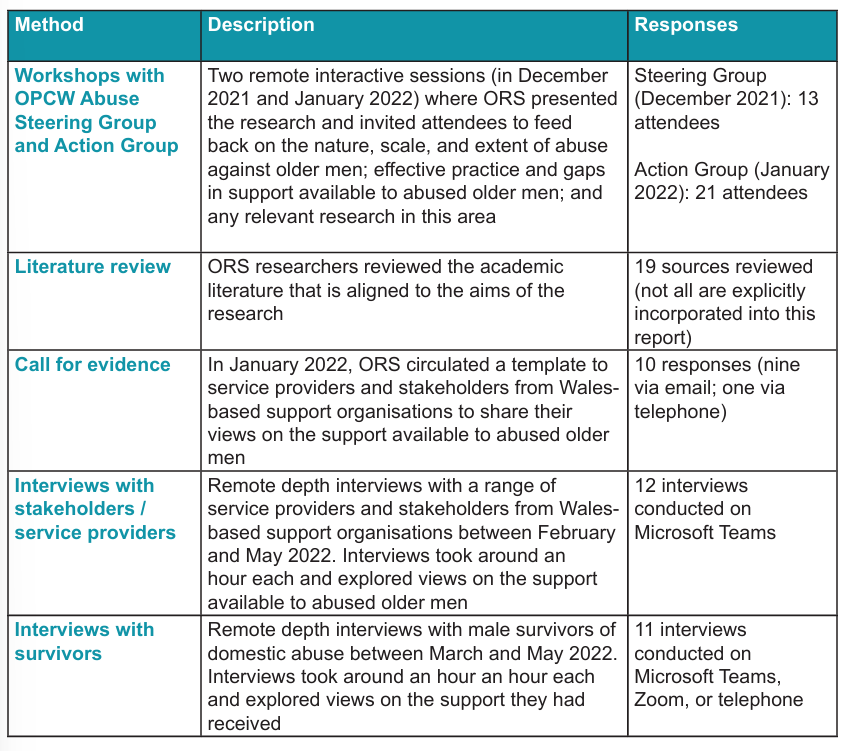
References
Baker, P. R. A., Francis, D. P., Hairi, N. N., Othman, S., and Choo, W. Y. (2016). Interventions
for preventing abuse in the elderly (Review). Cochrane Database of Systematic Reviews 2016,
Issue 8, Art. No. CD010321. DOI: 10.1002/14651858.CD010321.pub2.
Barry, N., and Bowen-Davies, R. (2021). Support Services for Older People Experiencing Abuse
in Wales. Older People’s Commissioner for Wales. Available at: https://olderpeople.wales/
library/Support_Services_for_Older_People_Experiencing_Abuse_in_Wales.pdf
Bates, E. A. (2020) “No one would ever believe me”: An exploration of the impact of intimate
partner violence victimisation on men. Psychology of Men & Masculinities, 21(4), pp.497–507.
https://doi.org/10.1037/men0000206
Bloemen, E. M., Rosen., T., LoFaso, V., Lasky, A., Church, S., Hall, P., Weber, T., and Clark, S.
(2019). Lesbian, Gay, Bisexual, and Transgender Older Adults’ Experiences with Elder Abuse
and Neglect. Journal of the American Geriatrics Society, 67, pp. 2338-2345.
Grace, K. T., and Anderson, J. C. (2018). Reproductive Coercion: A Systematic Review. Trauma,
Violence, and Abuse, 19 (4), pp. 371-390. https://doi.org/10.1177/1524838016663935
Harries, S. and N. Bryer (2021). Evaluation of More than just words…, the follow-on strategic
framework for Welsh language services in health, social services and social care, 2016-2019:
Final Report. Cardiff: Welsh Government, GSR report number 55/2021. Available at: https://gov.
wales/evaluation-more-just-words-final-report
Her Majesty’s Inspectorate of Constabulary and Fire and Rescue Services (2019). The poor
relation: The police and CPS response to crimes against older people. London: HMICFRS.
Available at: The poor relation: The police and CPS response to crimes against older people
(justiceinspectorates.gov.uk)
Hoeger, K., Bates, L., Perry, P., Phan, T. T. N., and Whitaker, A. (2022). Domestic Homicide
Project Spotlight Briefing #2: Older Victims. Vulnerability Knowledge & Practice Programme.
Lazenbatt, A., Devaney, J. and Gildea, A. (2013) ‘Older women living and coping with domestic
violence’, Community Practitioner: The Journal of the Community Practitioners’ & Health
Visitors’ Association, 86 (2), pp. 28–32.
Machado, A., Hines, D., and Douglas, E. M. (2020). Male victims of female-perpetrated partner
violence: A qualitative analysis of men’s experiences, the impact of violence, and perceptions of
their worth. Psychology of Men & Masculinities, 21(4), pp.612-621.
Melchiorre, M.G., Di Rosa, M., Lamura, G., Torres-Gonzales, F., Lindert, J., Stankunas, M.,
Ioannidi-Kapolou, E., Barros, H., Macassa, G., and Soares, J. J. F. (2016) Abuse of Older Men
in Seven European Countries: A Multilevel Approach in the Framework of an Ecological Model.
PLoS ONE, 11(1): e0146425. doi:10.1371/journal.pone.0146425
Older People’s Commissioner for Wales and Welsh Government (2019). Information and
guidance on domestic abuse: Safeguarding older people in Wales. Available at: https://gov.
wales/sites/default/files/publications/2019-06/safeguarding-older-people-in-wales.pdf
Park, J., Nordstrom, S. K., Weber, K. M., Irwin, T. (2016). Reproductive coercion: uncloaking an
imbalance of social power. American Journal of Obstetrics and Gynecology, 214 (1), pp. 74-78.
SafeLives (2016). Safe Later Lives: Older people and domestic abuse. Spotlights Report
#Hidden Victims. Available at Safe Later Lives – Older people and domestic abuse.pdf
(safelives.org.uk)
Wallace, S., Wallace, C., Kenkre, J., Brayford, J. and Borja, S. (2019). Men who experience
domestic abuse: a service perspective. Journal of Aggression, Conflict and Peace Research, 11
(2), pp.127-137 https://doi.org/10.1108/JACPR-03-2018-0353
Welsh Government (2016). More than just words. Available at: http://www.wales.nhs.uk/sites3/
documents/415/web%20-%2016184_narrative_e_web.pdf
Wydall, S. and Zerk, R. (2017). Domestic abuse and older people: factors influencing help
seeking. The Journal of Adult Protection, vol.19(5), pp.247-260. https://doi.org/10.1108/JAP-03
2017-0010