Leaving up the fridge magnets – delivering inclusive home care support to older LGBTQ+ people in their homes
Professor Paul Willis, Cardiff University
‘Home is the comfiest place to be’, according to Winnie the Pooh. And for many of us this quote captures the familiar (and familial) comfort of living in a home that reflects the identities that matter to us, holds memories of important connections with significant others, and provides a private sanctuary from the busy world around us.
The possessions we treasure in our home often reflect important stories in our lives and the people that matter to us and that we hold dear. According to facts provided by the Older People’s Commissioner, the majority of older people in Wales live in their own home – 87% of people aged 65+ own their own home, with 10% living in social housing and 4% private renting.
The home is not always a safe sanctuary for all older people – for example, we know that experiences of domestic violence and anti-social activity in neighbourhoods can compromise the safety of home for a lot of people. Home care is one source of vital social care support in the community that helps a lot of older people with daily living tasks and ensures older people can continue to live independently in their own home. However, it relies on care workers coming into their home on a regular basis – people we will not know or be familiar with (at least not initially) and outside of our familiar circle of support.
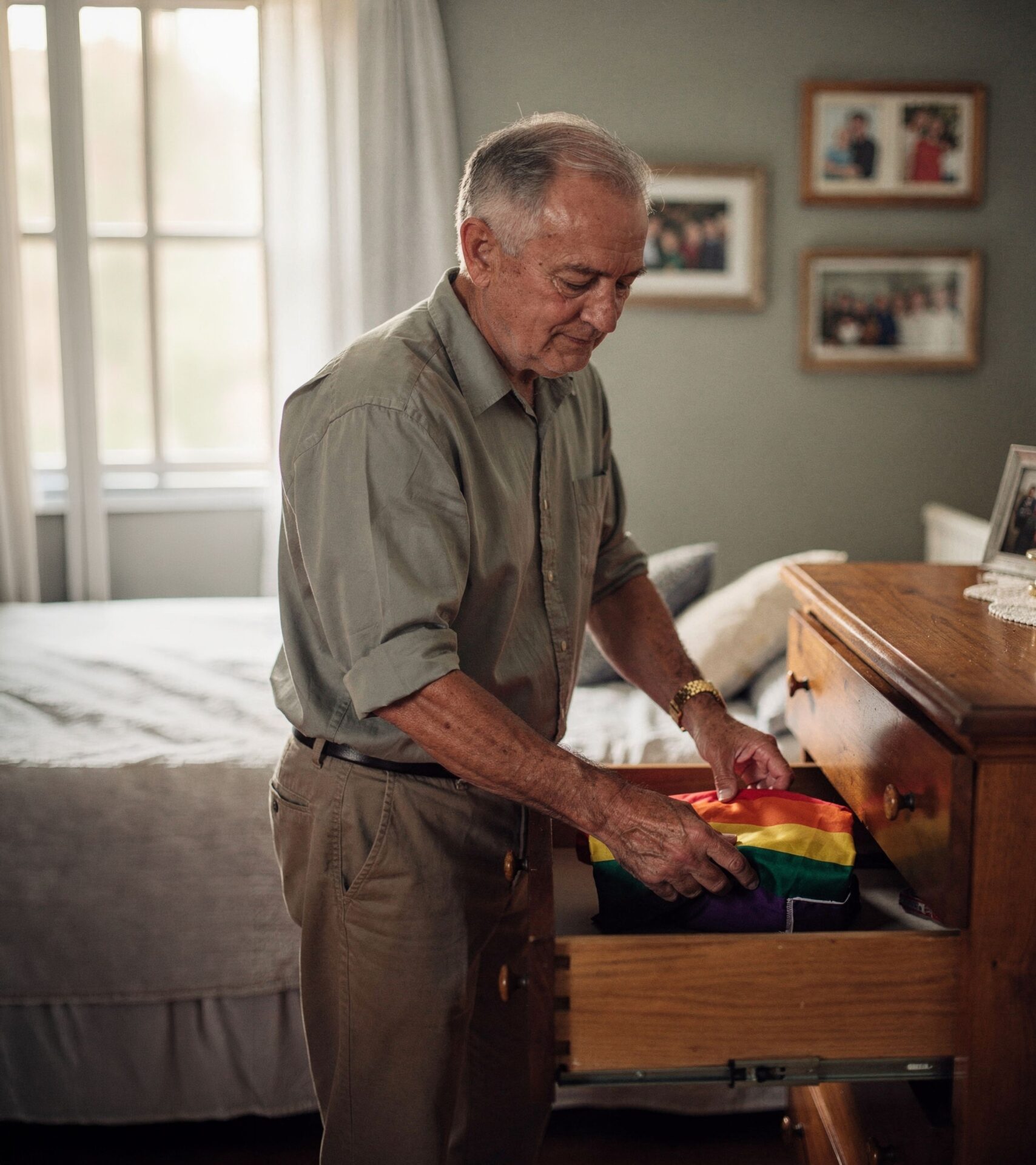
We know from previous research in the UK and beyond, and anecdotal reports locally, that many older people who identify as LGBTQ+ worry about home care workers and other helping professionals coming into their home. They may have worries about home care workers bringing homophobic, biphobic or transphobic views and attitudes with them and not being treated with dignity and respect and, related to this, worries about having to remove or hide personal items that signify LGBTQ+ identities and relationships, such as photographs, books, artwork or even fridge magnets. As a gay man I enjoy collecting books about other LGBTQ+ people’s lives and life histories – it signifies my identity, who I am and what I value. I would struggle to take down my books from the shelves at home and hide these – it would feel like concealing an important part of who I am.
We also know from previous research that many older LGBTQ+ people report low trust and confidence in health and social care professionals. This may be based on earlier life experiences where LGBTQ+ people have encountered discriminatory and prejudiced views and attitudes from professionals such as GPs, mental health professionals or social workers.
This means social care providers and community services need to work that little bit harder to build older LGBTQ+ people’s trust and confidence as soon as they have initial contact with the service and must promote themselves as LGBTQ+ inclusive in all forms of marketing and communications. Older LGBTQ+ people need to see that these services are clearly for them and reflect people like them receiving good support that upholds their dignity.
The LEAP study is a two-year study looking at the delivery of inclusive home care services to older LGBTQ+ people across Wales and England. It’s hosted by the University of Kent in partnership with Cardiff University. The wider aim of the study is to get a better understanding of how home care workers view and support older LGBTQ+ people in their own homes and how older LGBTQ+ people experience these services when they have needed them.
Over the last few months, we’ve been travelling around Wales and England speaking to older people (60 + years) about their current or recent experiences of receiving home care. We’re interested in hearing stories about good, supportive services as well as accounts of services that could have been better or need improvement. Older LGBTQ+ people will not be identified by taking part in the study and taking part will not impact on the home care service they receive. Our team has been careful to schedule interviews at times that suit older people and that do not compromise the care and support they receive. Some older people have preferred to speak to us with a family member or partner/spouse present, which we have encouraged to make this a really safe space.
All interviews have been led by two people – a member of our research team who identifies as LGBTQ+ and an LGBTQ+ people who is 60+ years of age and has some experience of adult social care support. We think this is important to make sure that research projects about older people include older people in their design and delivery and to make sure the interview process is a supportive and safe space to share really personal experiences.
Are you an older LGBTQ+ person living in Wales with current or recent experience of receiving home care? We’d like to hear from you. Read more about our study here: https://research.kent.ac.uk/leap-study/
Or email or telephone Shannon to find out more. Email: s.orourke-11@kent.ac.uk Telephone: 07907878293